Fine Fragrance Oil
Create a fine-fragrance direction for a defined perfume format, concentrate loading, carrier, audience, and target market.
Discuss your project →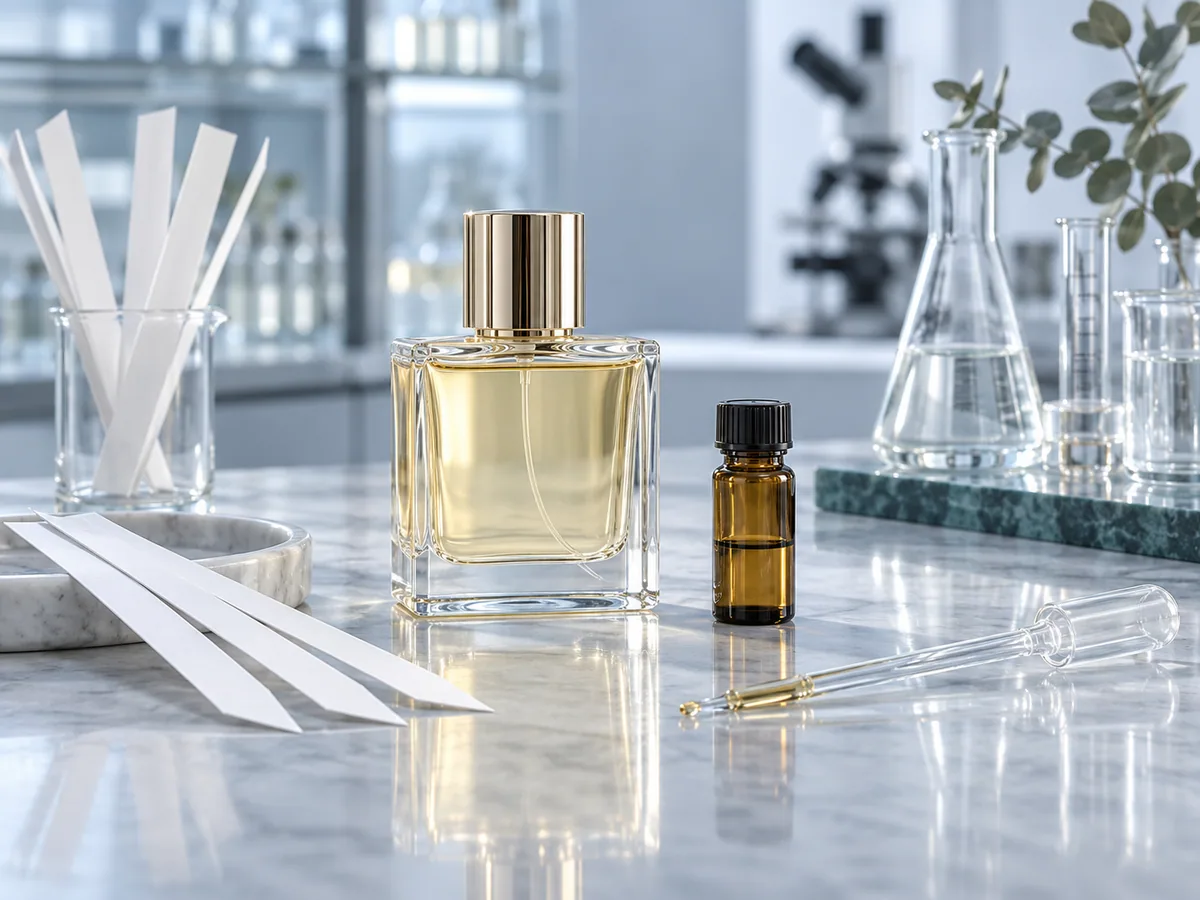 Illustrative concept image
An olfactive brief becomes a product brief.
A fine-fragrance concentrate should be judged in its intended alcohol, oil, or other base, at the planned dilution and packaging. Market documentation follows the selected formula and use category.
Olfactive direction
Agree scent family, references, and intended audience.
Finished format
Clarify carrier, concentrate loading, and pack.
Review scope
Set sensory, appearance, and documentation checks for the target market.
What to define in your brief.
These details help set up a useful first discussion and a relevant evaluation route.
Share desired olfactive cues without assuming a copy is possible or permissible.
Define alcohol, oil, or alternative carrier.
Identify product format, dosage, and bottle materials.
State destination and disclosure needs.
Include the base identifier, intended loading and sample code in your feedback so the next discussion refers to the same trial.
Translate an olfactive idea into a finished format.
A fine-fragrance brief should describe both the scent direction and the product in which it will be used. Evaluate candidates at the intended dilution rather than treating concentrate smell as the final experience.
01Build a clear scent direction
Describe the scent family, key impressions, intended audience and positioning. Explain what should be retained or changed in a reference instead of relying only on its name. Agree which sensory qualities will guide the first shortlist and which are secondary.
02Compare in the intended carrier
Prepare coded candidates in the selected alcohol, oil or other carrier at the planned loading. Record appearance and scent development under the agreed preparation and observation routine. Compare opening, later character and overall balance using the same method for each sample.
03Connect approval to the final product
Record the accepted sample code, dilution, carrier and packaging. Review the requested use-category and market documents for that formula. If the format changes, return to the relevant formulation and document checks rather than assuming the previous approval covers the new product.
Agree the final trial conditions and acceptance criteria with your product team. This guide describes an evaluation approach, not results for a tested formula.
Common questions.
Do you offer a guaranteed duplicate of a branded perfume?
We can discuss an olfactive direction, but do not promise a replica or imply another brand's endorsement.
Can the concentrate go directly on skin?
Do not assume so. Suitability depends on the finished formula, intended use, and applicable assessment.
What documents can be requested?
Discuss formula-specific SDS, IFRA conformity information, and allergen disclosure for the relevant application.
Start a formulation discussion.
Share your product base, target market, scent direction, and expected quantity. We can discuss a suitable sample and document scope.